Hatchetfish - Albino Common
Albino Hatchetfish
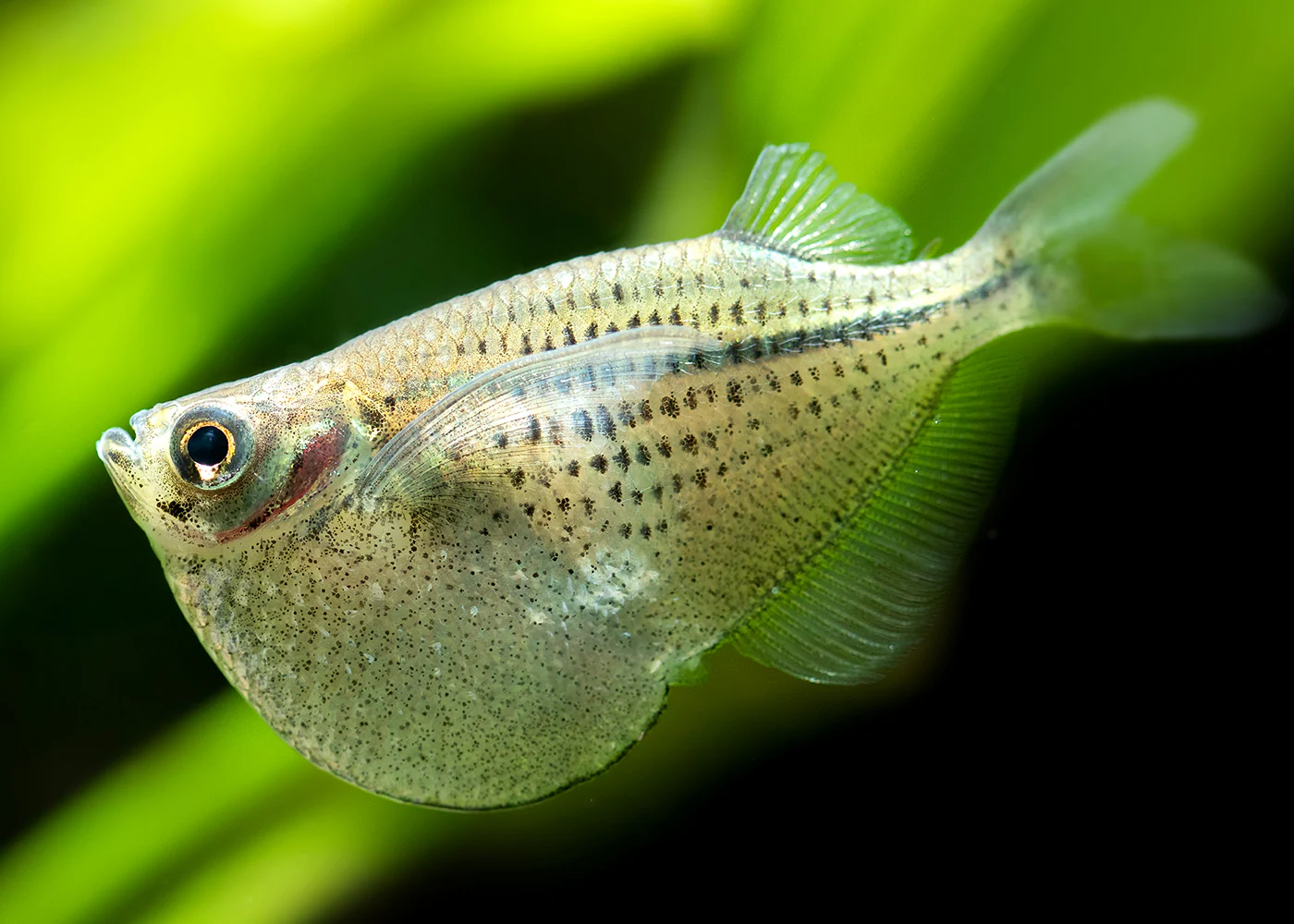
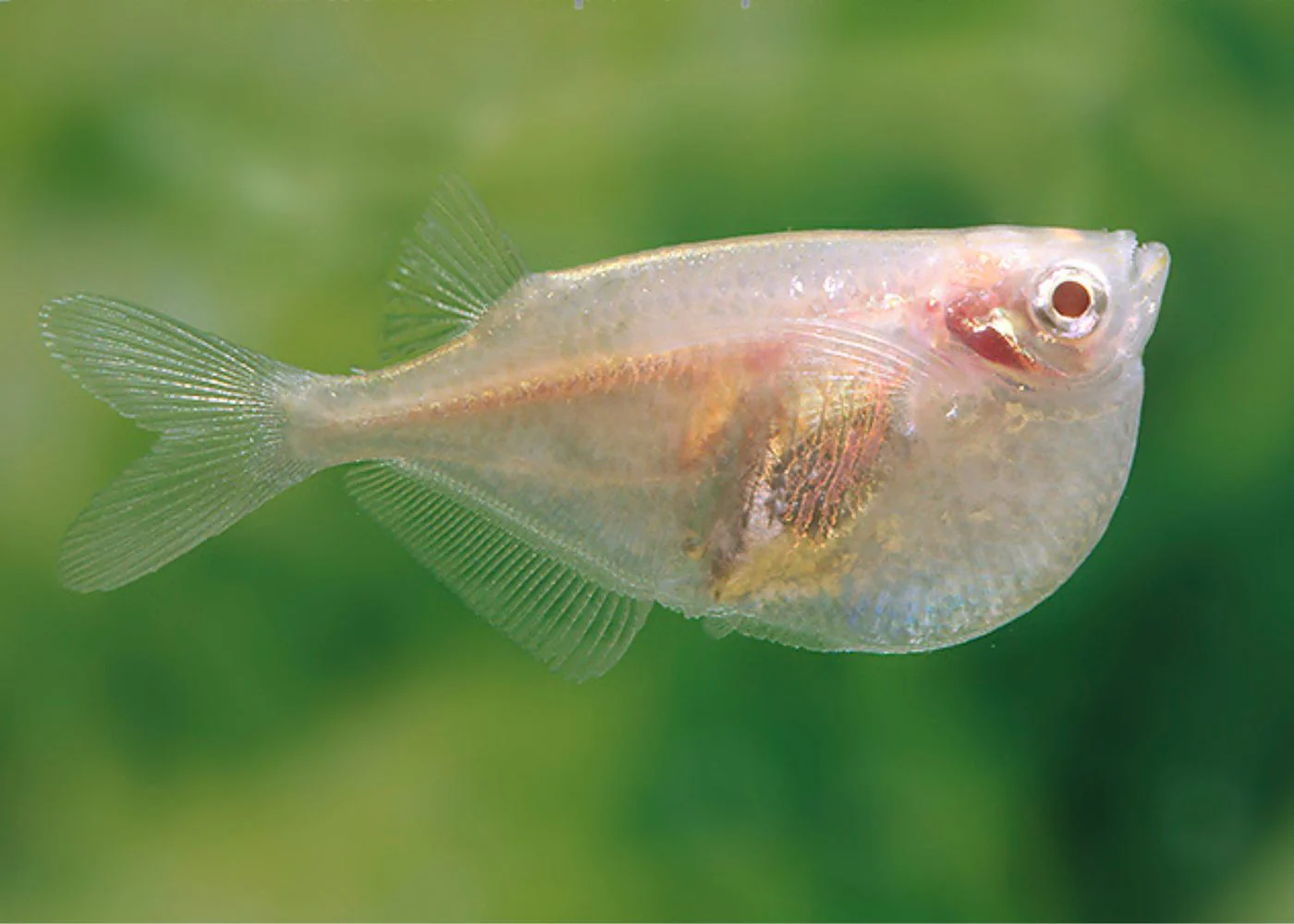
The Albino Hatchetfish is a unique and eye-catching freshwater surface-dwelling species known for its pale metallic body, translucent fins, and distinctive hatchet-shaped profile. This selectively bred albino variety brings a bright, delicate appearance to peaceful community aquariums while displaying fascinating shoaling behaviour near the water surface. Its active yet calm temperament makes it an excellent addition to planted aquariums and soft-water tropical setups.
Features of Albino Hatchetfish
- Pale albino coloration with reflective silver-white tones
- Distinctive hatchet-shaped body profile
- Surface-dwelling schooling fish with active swimming behaviour
- Grows to approximately 4–6 cm
- Peaceful temperament ideal for community aquariums
- Best kept in groups of 6 or more
- Excellent choice for planted tropical aquariums
The best aquarium size for Albino Hatchetfish
The Albino Hatchetfish thrives in aquariums with a minimum capacity of 80 litres, providing sufficient surface area and swimming space for schooling behaviour. Longer aquariums with calm upper water movement are preferred to replicate their natural habitat.
Maintain water temperatures between 24–27 °C, a pH range of 6.0–6.8, and soft to moderately soft water conditions. Stable water quality and a tightly fitted lid are essential, as hatchetfish are known jumpers.
Tank Mate Compatibility for Albino Hatchetfish
The Albino Hatchetfish is highly peaceful and compatible with other calm tropical community species, including:
- Neon Tetra
- Corydoras Catfish
- Harlequin Rasbora
- Rummy Nose Tetra
- Dwarf Gourami
Avoid aggressive fish or fast-moving fin-nippers that may stress surface-dwelling species.
Diet for Albino Hatchetfish
The Albino Hatchetfish is an omnivorous surface feeder that prefers small floating foods. Offer high-quality flakes, floating micro pellets, and frozen or live foods such as mosquito larvae, daphnia, and brine shrimp.
A varied diet promotes healthy growth, strong immune health, and active schooling behaviour. Feed small portions 1–2 times daily, ensuring food remains accessible at the surface.
Aquarium Setup Albino Hatchetfish
Aquarium Filtration
Gentle filtration with minimal surface turbulence is ideal, maintaining clean water while allowing comfortable surface swimming behaviour.
Aquarium Plants
Floating plants such as Salvinia and Amazon Frogbit provide security and help recreate the shaded environments preferred by hatchetfish.
Aquarium Lighting
Moderate lighting works best, particularly in planted aquariums with shaded surface coverage.
Aquarium Heating
A reliable aquarium heater should maintain stable temperatures between 24–28 °C to support tropical conditions.
Aquarium Substrate
Dark sand or fine gravel substrates enhance the albino coloration while contributing to a natural aquarium appearance.
Aquarium Decorations
Incorporate driftwood, floating plants, and open surface swimming areas. A secure aquarium lid is essential to prevent jumping, especially during feeding or sudden movement within the tank.
Product Information
Product Information
Shipping & Returns
Shipping & Returns
Description
Albino Hatchetfish
The Albino Hatchetfish is a unique and eye-catching freshwater surface-dwelling species known for its pale metallic body, translucent fins, and distinctive hatchet-shaped profile. This selectively bred albino variety brings a bright, delicate appearance to peaceful community aquariums while displaying fascinating shoaling behaviour near the water surface. Its active yet calm temperament makes it an excellent addition to planted aquariums and soft-water tropical setups.
Features of Albino Hatchetfish
- Pale albino coloration with reflective silver-white tones
- Distinctive hatchet-shaped body profile
- Surface-dwelling schooling fish with active swimming behaviour
- Grows to approximately 4–6 cm
- Peaceful temperament ideal for community aquariums
- Best kept in groups of 6 or more
- Excellent choice for planted tropical aquariums
The best aquarium size for Albino Hatchetfish
The Albino Hatchetfish thrives in aquariums with a minimum capacity of 80 litres, providing sufficient surface area and swimming space for schooling behaviour. Longer aquariums with calm upper water movement are preferred to replicate their natural habitat.
Maintain water temperatures between 24–27 °C, a pH range of 6.0–6.8, and soft to moderately soft water conditions. Stable water quality and a tightly fitted lid are essential, as hatchetfish are known jumpers.
Tank Mate Compatibility for Albino Hatchetfish
The Albino Hatchetfish is highly peaceful and compatible with other calm tropical community species, including:
- Neon Tetra
- Corydoras Catfish
- Harlequin Rasbora
- Rummy Nose Tetra
- Dwarf Gourami
Avoid aggressive fish or fast-moving fin-nippers that may stress surface-dwelling species.
Diet for Albino Hatchetfish
The Albino Hatchetfish is an omnivorous surface feeder that prefers small floating foods. Offer high-quality flakes, floating micro pellets, and frozen or live foods such as mosquito larvae, daphnia, and brine shrimp.
A varied diet promotes healthy growth, strong immune health, and active schooling behaviour. Feed small portions 1–2 times daily, ensuring food remains accessible at the surface.
Aquarium Setup Albino Hatchetfish
Aquarium Filtration
Gentle filtration with minimal surface turbulence is ideal, maintaining clean water while allowing comfortable surface swimming behaviour.
Aquarium Plants
Floating plants such as Salvinia and Amazon Frogbit provide security and help recreate the shaded environments preferred by hatchetfish.
Aquarium Lighting
Moderate lighting works best, particularly in planted aquariums with shaded surface coverage.
Aquarium Heating
A reliable aquarium heater should maintain stable temperatures between 24–28 °C to support tropical conditions.
Aquarium Substrate
Dark sand or fine gravel substrates enhance the albino coloration while contributing to a natural aquarium appearance.
Aquarium Decorations
Incorporate driftwood, floating plants, and open surface swimming areas. A secure aquarium lid is essential to prevent jumping, especially during feeding or sudden movement within the tank.